
Hotel Technology
How AC Is Managed in Stages While a Room Is Empty: Automation via Presence Sensor
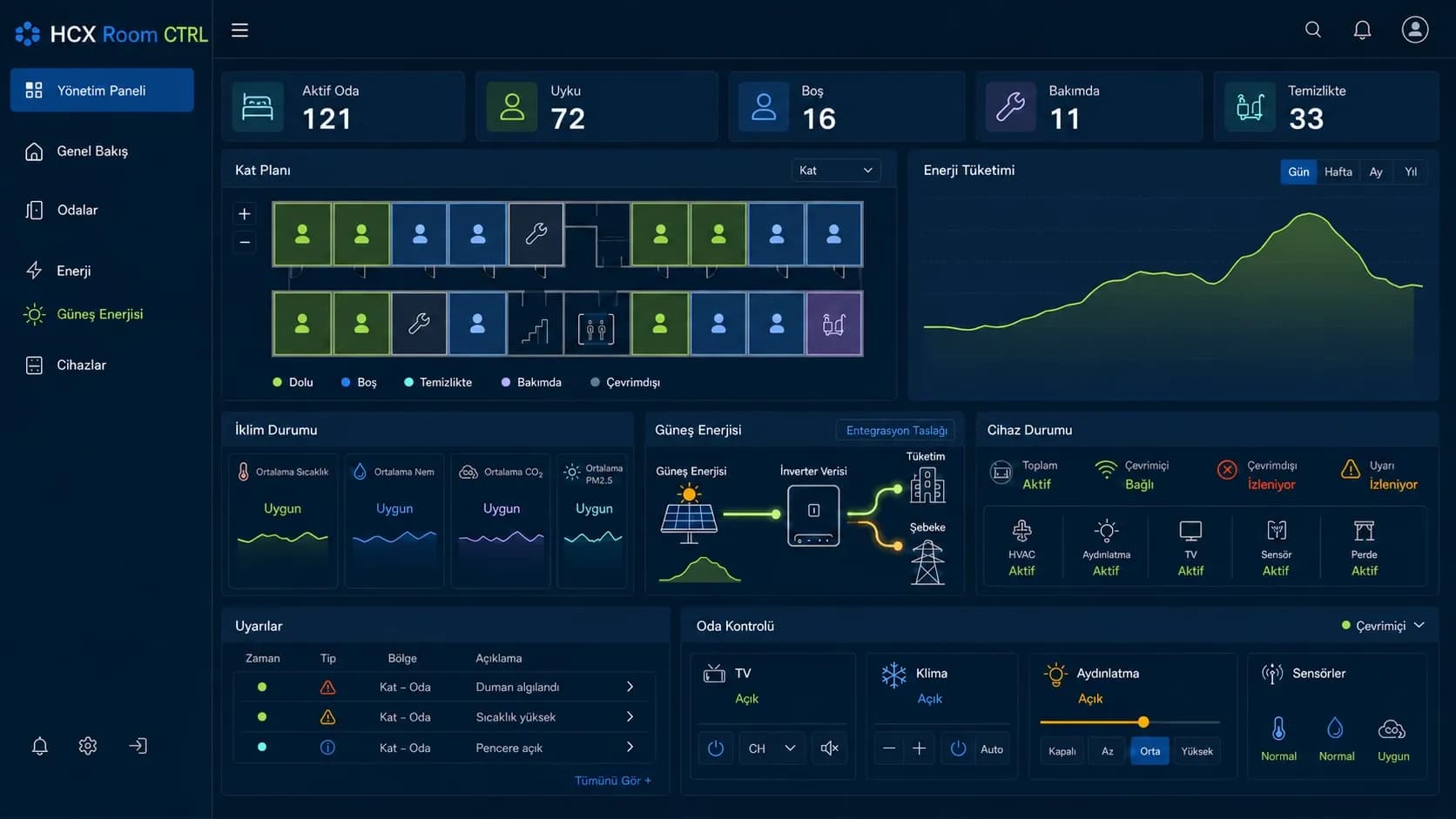
The secret to good automation isn't sudden, hard decisions — it's acting in stages. If the AC shuts off the instant a guest steps out for a few minutes, comfort suffers; but running at full power in a room that's been empty for hours is wasteful too.
Step 1: Short absence tolerance
When a room becomes vacant, the system doesn't react immediately; for brief absences (like a guest heading down to the lobby), the AC keeps running at its current setting.
Step 2: Season-aware economy setting
If the absence passes a certain threshold, the system shifts the AC to a lower-energy economy setting — comfort isn't cut off entirely, just optimized.
Step 3: Shutdown on extended vacancy
If the room stays empty for an extended period, the AC is safely shut down; this scenario runs on threshold times configured specifically for the project.
Step 4: Restoring comfort when the guest returns
When the guest returns to the room, the system is designed to restore the last comfort setting — the guest never walks into a room with the AC left off.
Why this approach is preferred
A staged logic avoids the comfort loss caused by abrupt on/off cycling while still capturing energy opportunities — striking that balance is far more complex than a fixed timer, but far more effective too.
Related Product
HCX RoomController →Let's Talk About Your Project
Have questions about this topic? Get in touch with our team or request a quote.